GANGA MEMORIAL COLLEGE OF POLYTECHNIC
HARNAUT, NALANDA
Approved by AICTE, HRD, Govt. Of India Affiliated to SBTE, Patna, gmcp2611@gmail.com, +91-9473000022
Online Payment (Ganga Memorial Educational and Developement Society) Online Admission
About Electrical Engineering
Electrical Engineering broadly involving electricity, electromagnetism and electronics is essential in modern human life and industries. The present day academic activities of electrical engineering are very broad with this due reason. The electrical engineering department at Ganga Memorial College of Polytechnic has specialized faculties. The academic and research activities in the department focus on the frontier areas of electrical engineering such as power quality studies, distributed generation, inverter design, control strategies for complex systems.
Vision
To produce creative, self-reliant,
ethically conscious and technically sound technocrats in the field of electrical engineering department by providing
quality education, superior lab facility, industry collaboration, and technical
skill required for the nation and state development.
Mission
M1 To
produce fundamental, and technically sound technocrats by providing quality
education
M2 To
deliver strong practical insights to electrical engineering students through
superior lab facilities and industrial engagement.
M3 To provide ethical, managerial and sustainable value in electrical engineers
Program educational outcome (PEO) of the department
PE01 To produce technically
competitive, innovative, and creative technocrats that are ready to face a
dynamic environment in
electrical automation with their technical, practical skill.
PEO2 To encourage our diploma students to puruse
higher education
PEO3 To build a collaborative, ethical, and sustainable skill within diploma students who become socially responsible human beings throughout their life.
Program outcome (PO)
and program specific outcome (PSO)
PO
1. Basic and Discipline specific knowledge: Apply knowledge of basic mathematics, science and engineering fundamentals and engineering specialization to solve the engineering problems.
2. Problem analysis: Identify and analyse
well-defined engineering problems using codified standard methods.
3. Design/ development of solutions: Design
solutions for well-defined technical problems and assist with the design of
systems components or processes to meet specified needs.
4. Engineering Tools, Experimentation and Testing:
Apply modern engineering tools and appropriate technique to conduct standard
tests and measurements.
5. Engineering practices for society,
sustainability and environment: Apply appropriate technology in context of
society, sustainability, environment and ethical practices.
6. Project Management: Use engineering
management principles individually, as a team member or a leader to manage
projects and effectively communicate about well-defined engineering activities.
7. Life-long learning: Ability to analyse individual needs and engage in updating in the context of technological changes.
PSO
PSO1 Utilize knowledge of electrical circuits, machines, power systems, and control systems to analyze and solve engineering problems with the aid of modern software and hardware tools.
PSO2 Exhibit professionalism, effective communication, and a commitment to safety and ethics while working in multidisciplinary teams, preparing for careers or higher education in electrical and allied engineering domains.
Course structure
1st Semester Subjects Mathematics-II Applied Physics-II Introduction to IT Systems Fundamental of Electrical & Electronics Engg. | 2nd
Semester Subjects Mathematics-I Applied Physics-I Applied Chemistry Communication Skills in English |
3rd
Semester Subjects Introduction to Electric Power
Generation Systems Electrical
Circuits Electrical and Electronic Measurements Electric Motors and Transformers | 4th Semester Subjects Power Electronics Electric Power Transmission and Distribution Induction, Synchronous and Special Electrical Machines Solar Power technologies |
5th
Semester Subjects Microprocessor
&Microcontroller Energy Conservation and Audit Switchgear and Protection Electric Traction | 6th
Semester Subjects Entrepreneurship and start–ups Building Electrification Utilization of Electrical Energy Network Theory |
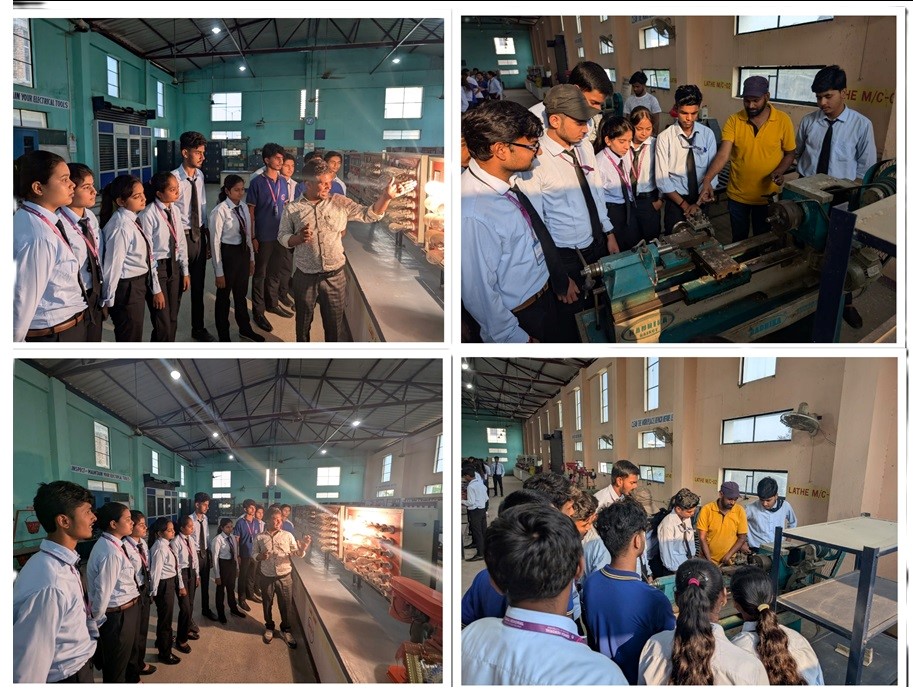
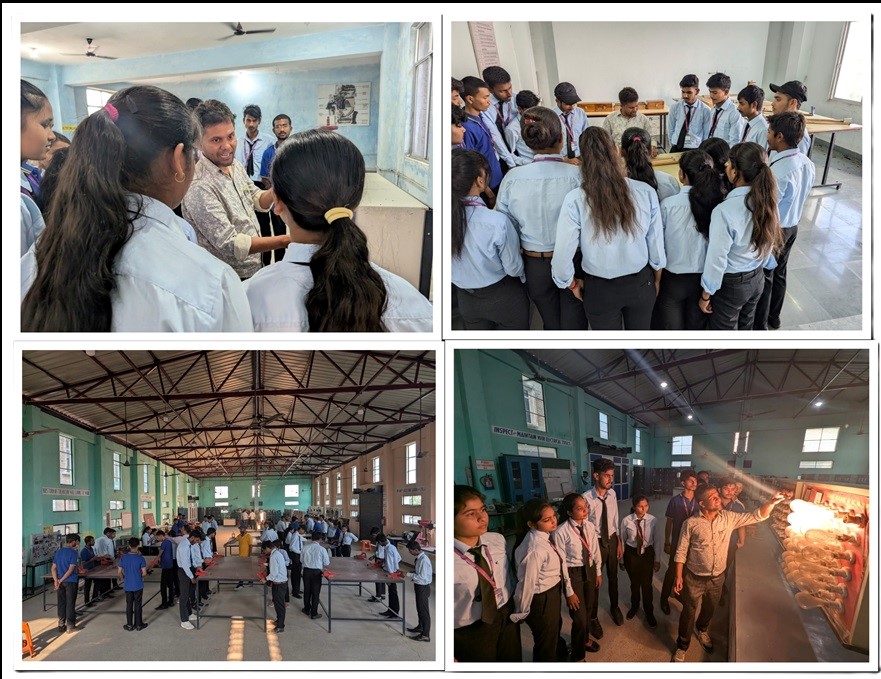
Lab Facility
Our Achievements


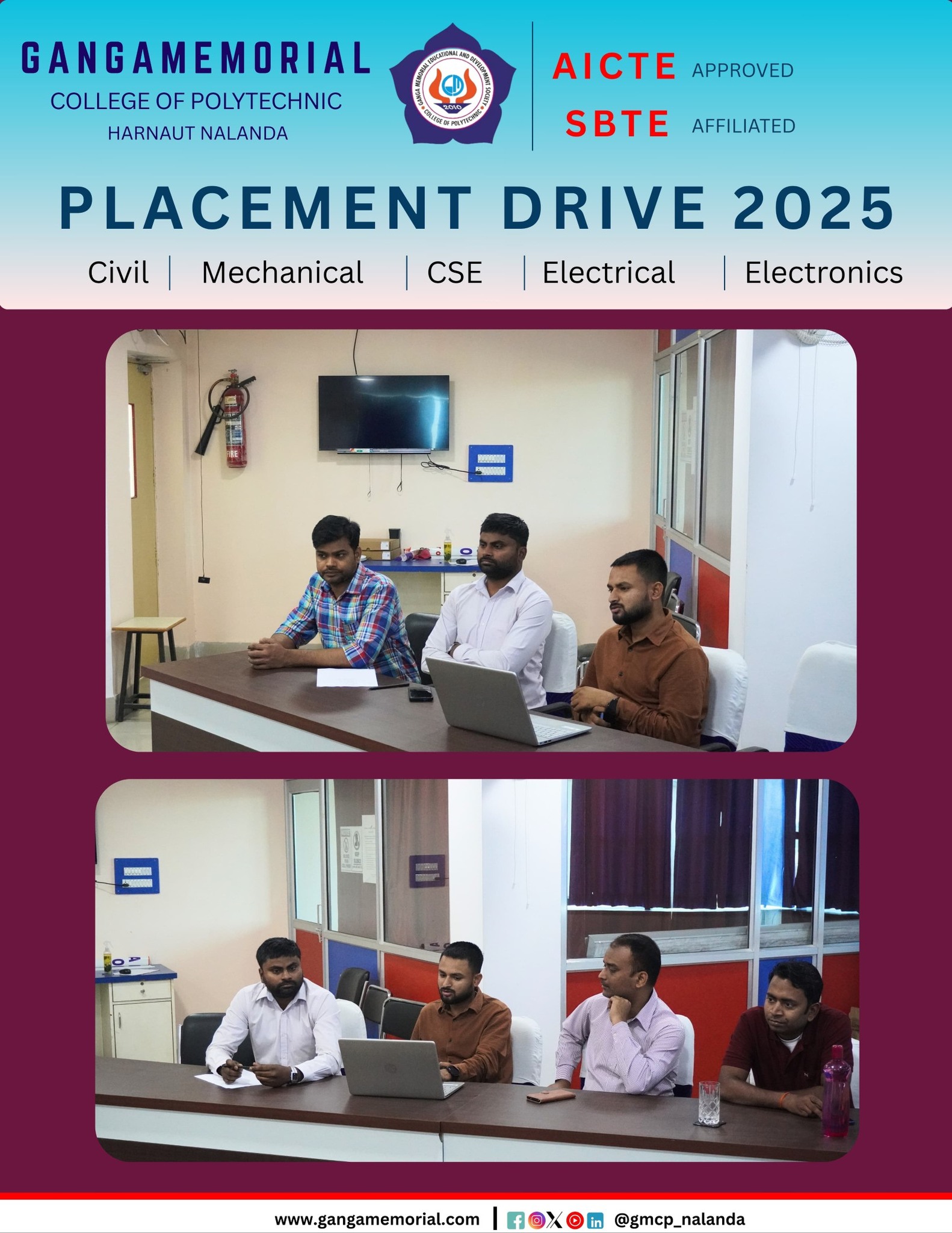
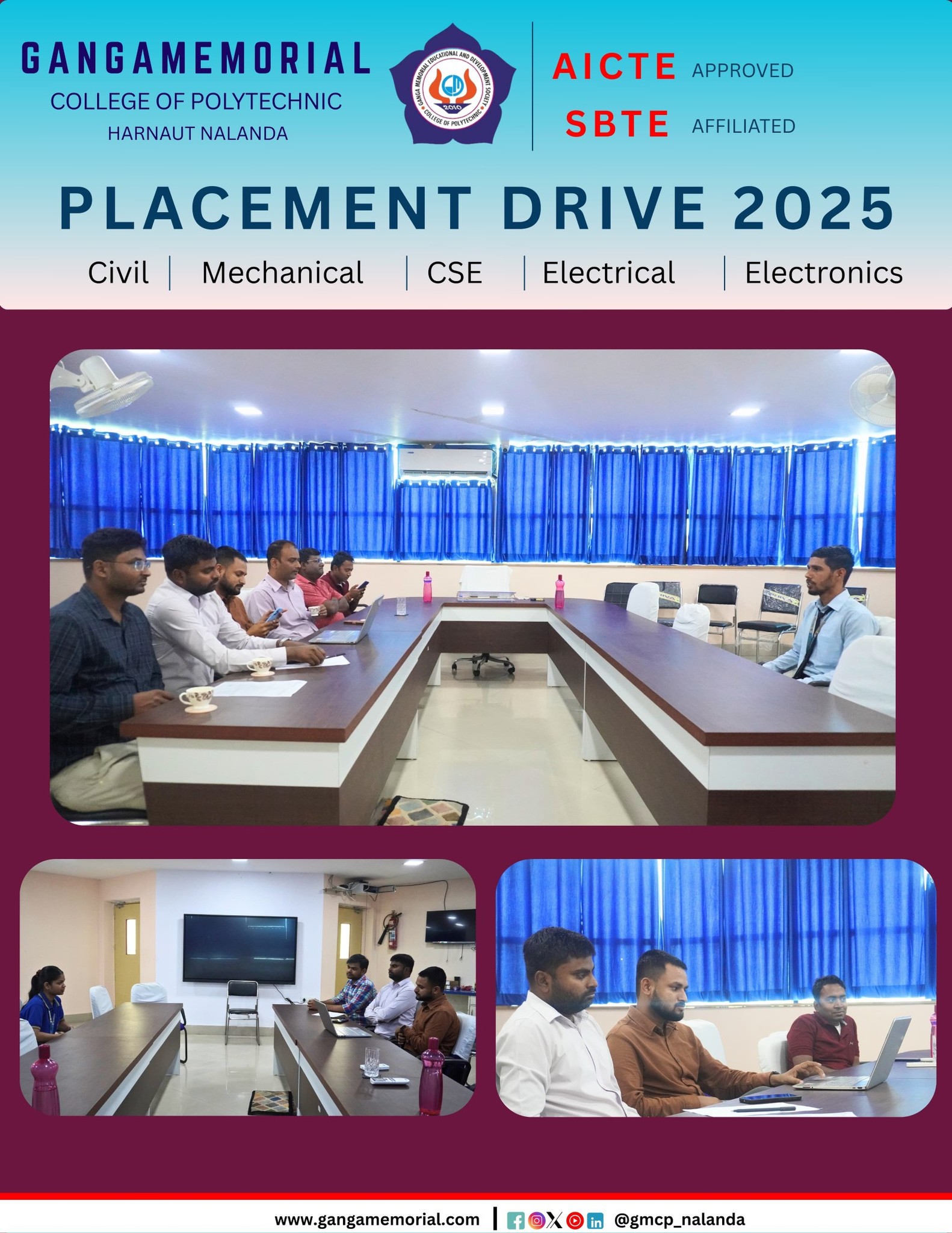
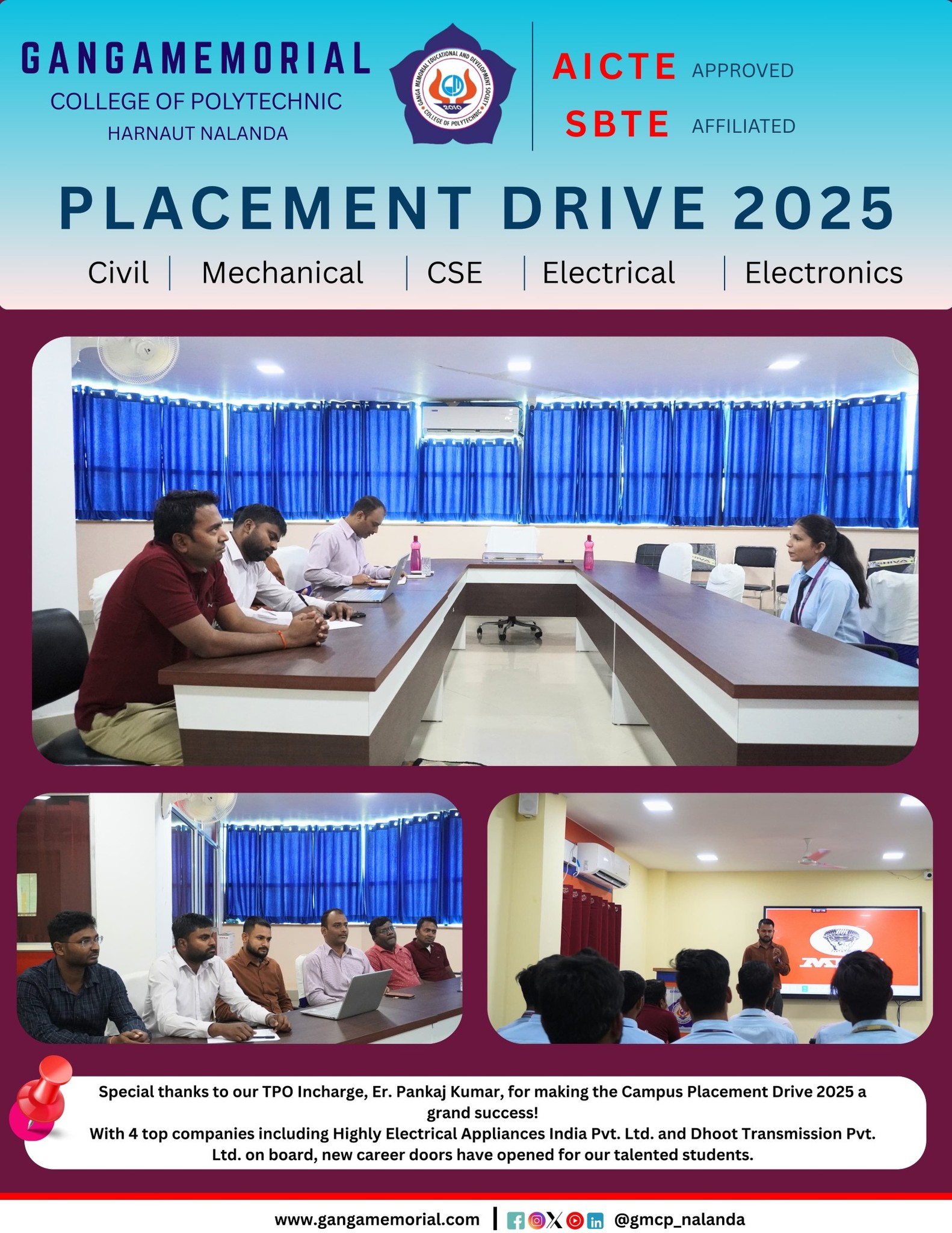
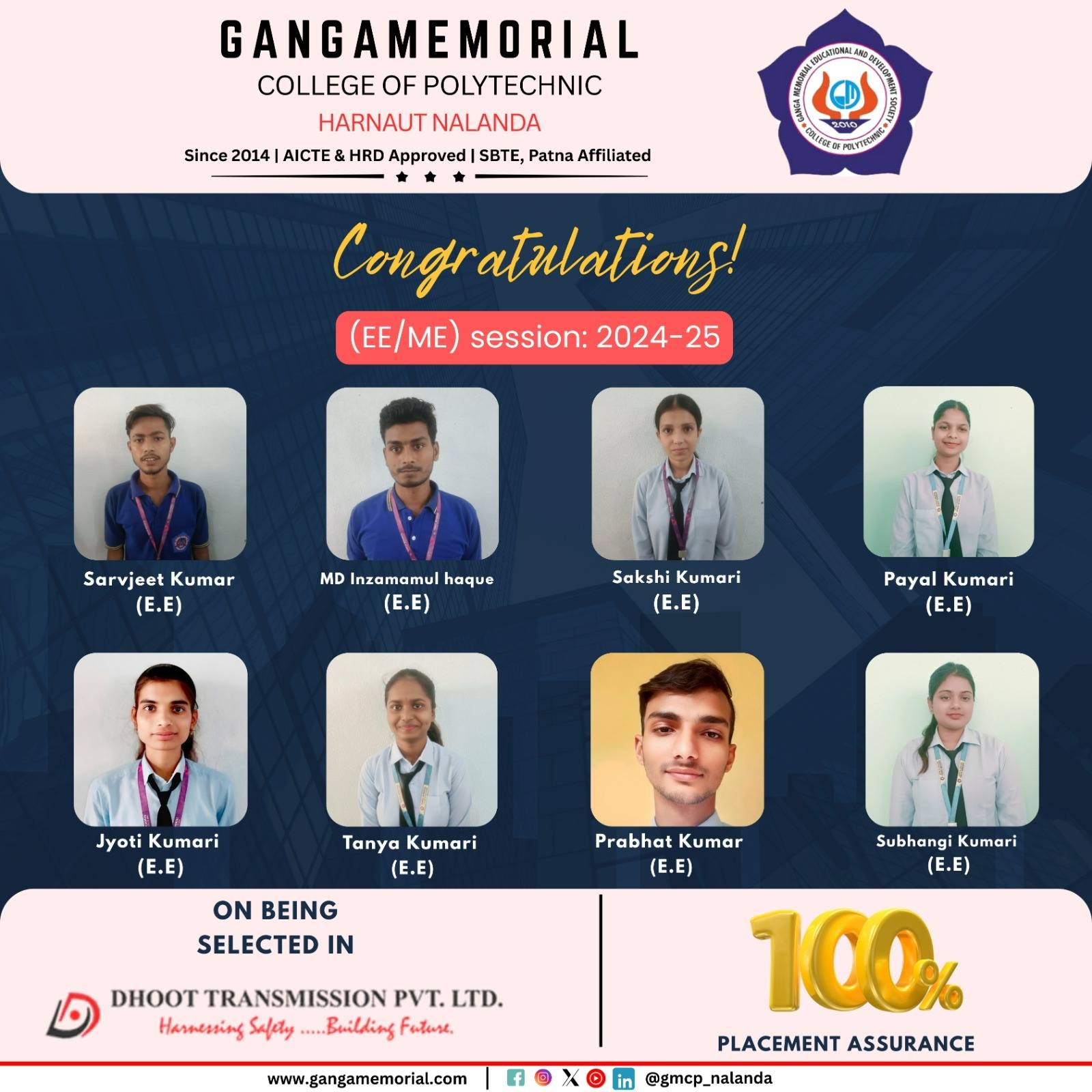

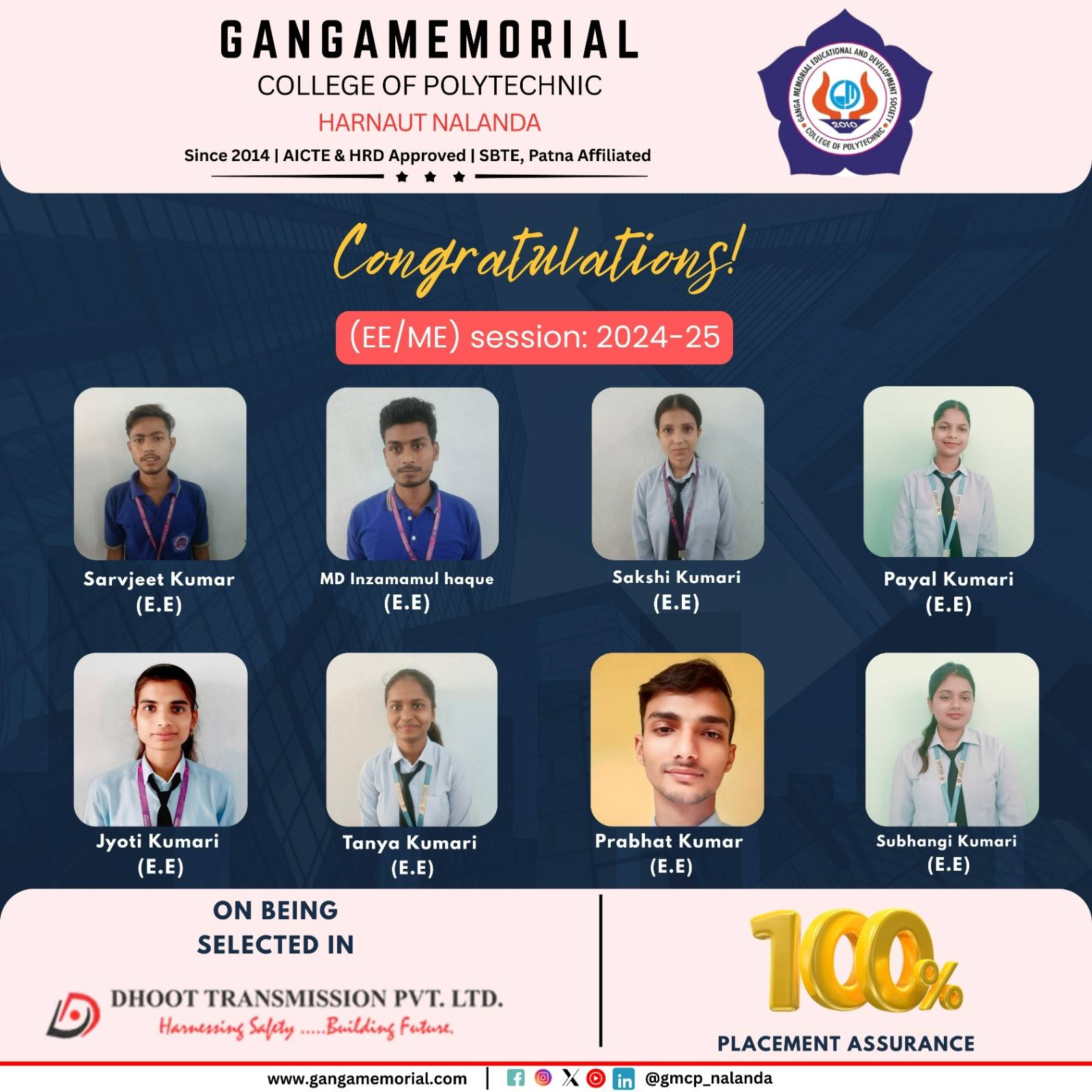
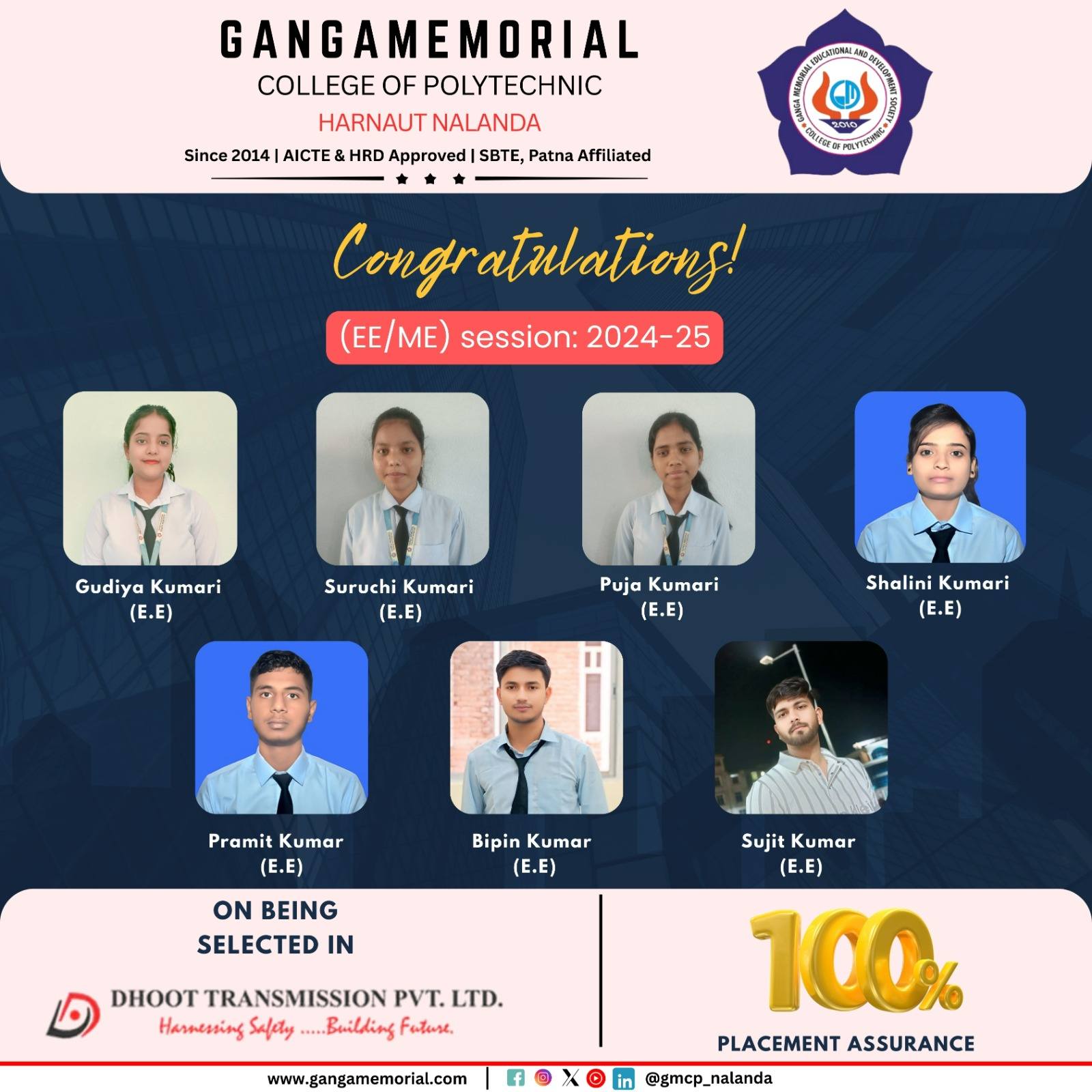
Research Projects
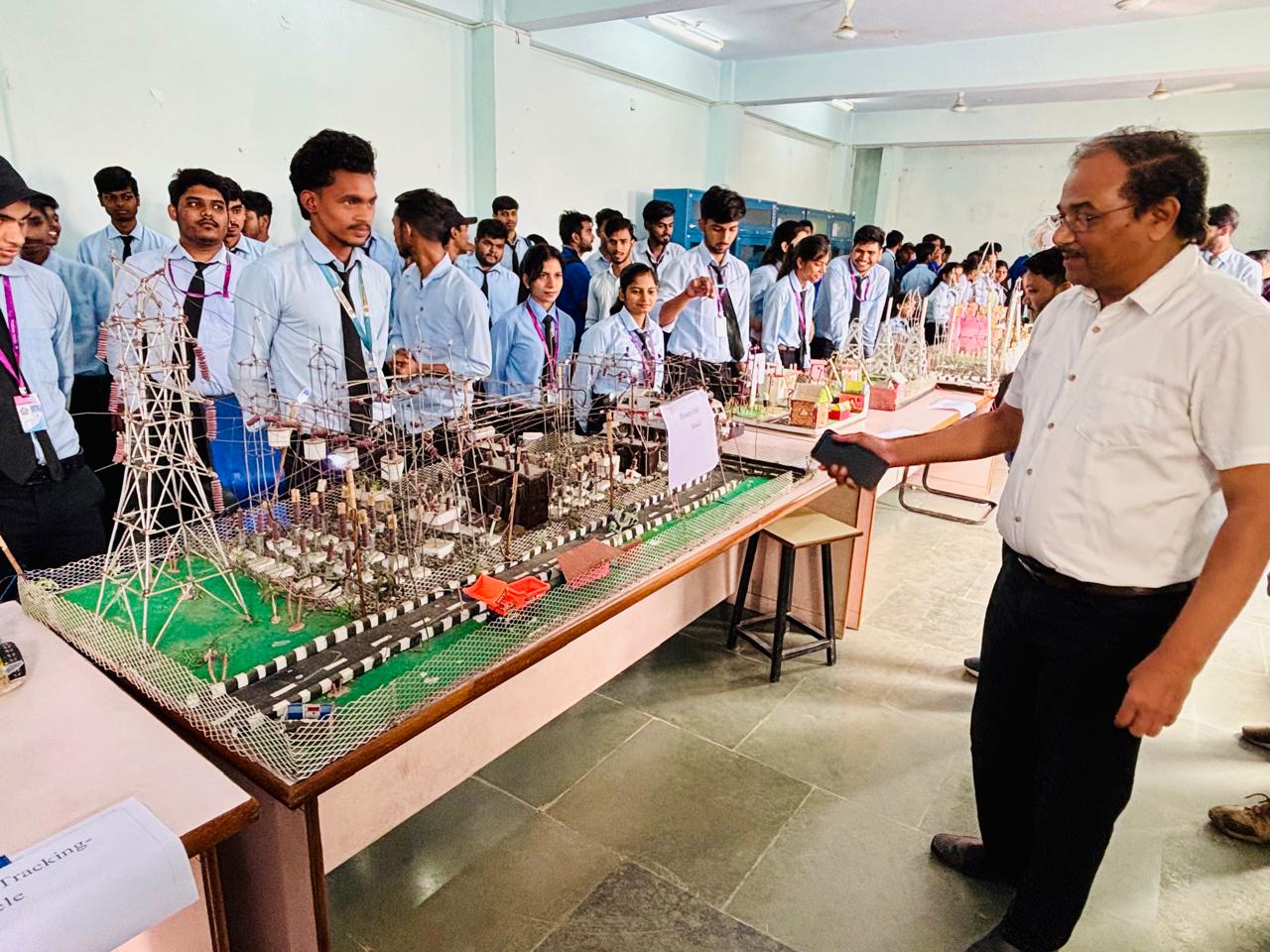

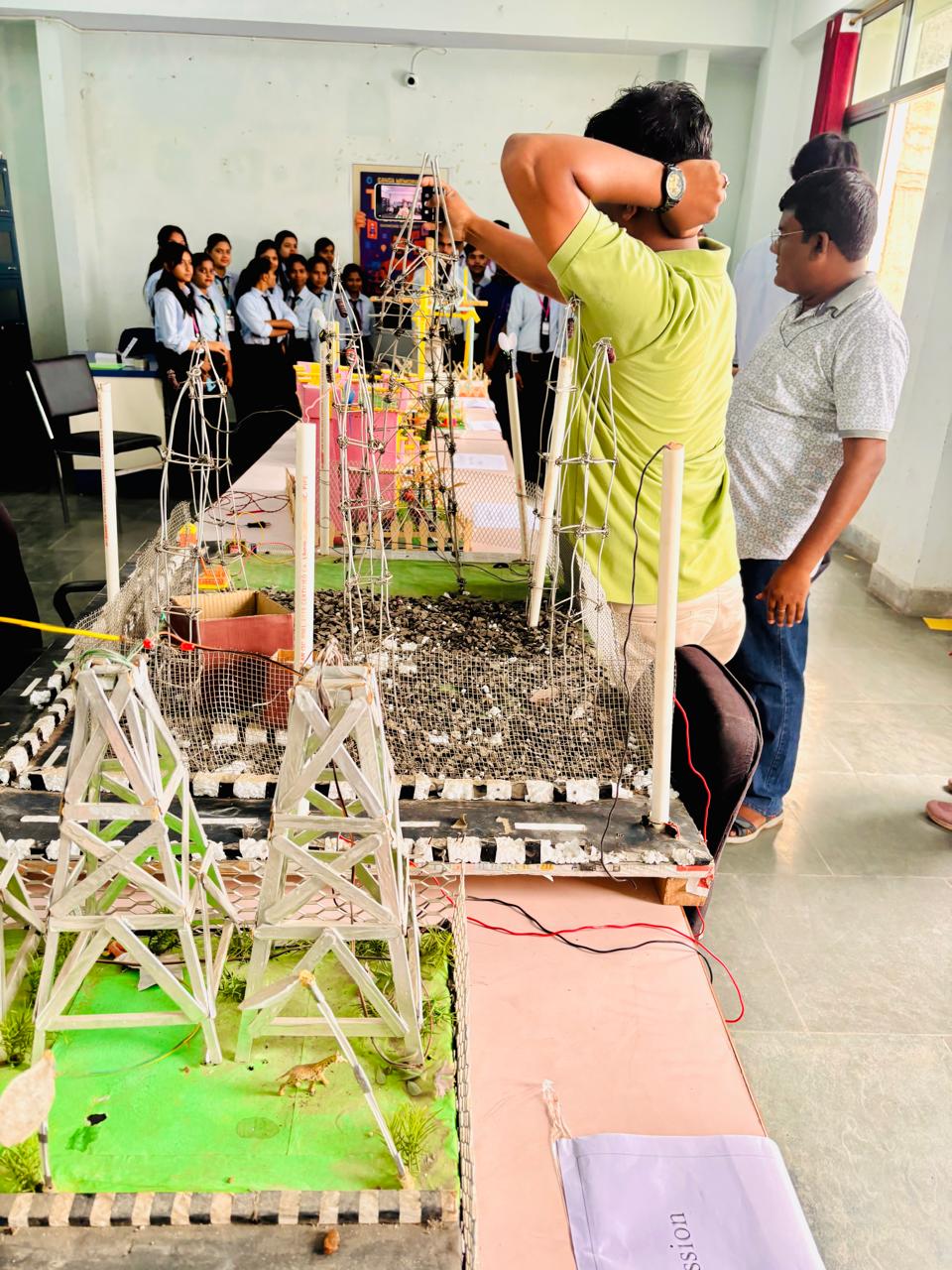
Electrical Engg. 2022-23 (Jan-June)
Electrical Engg. 2022-23 (July-Dec)

Ganga Memorial College of Polytechnic is proposed and identified at Kharuara, Harnaut, Dist.- Nalanda (BIHAR). It’s aim is to provide industry relevant education and training to its students with well crafted practical training Programme for the students in different semester of the courses.
+91-9473000022
+91-9288052611
gangamemorial@gmail.com
gmcp2611@gmail.com
NH-20, Ganga Nagar Near- Village- (Kharuara), Harnaut, Nalanda, Bihar-(803110)