GANGA MEMORIAL COLLEGE OF POLYTECHNIC
HARNAUT, NALANDA
Approved by AICTE, HRD, Govt. Of India Affiliated to SBTE, Patna, gmcp2611@gmail.com, +91-9473000022
Online Payment (Ganga Memorial Educational and Developement Society) Online Admission
About Civil Engineering
Civil Engineering
is a professional engineering discipline that deals with the design,
construction, and maintenance of the physical and naturally built environment,
including works like roads, bridges, canals, dams, and buildings. The
Department of Civil Engineering of Ganga memorial College of polytechnic has
major missions listed below. Relevance to industry and society Contribution to
sustainable development.
Vision & Mission of the department
Vision
To produce creative, self-reliant,
ethically conscious and technically sound technocrats in the field of civil
engineering department by providing quality education, superior lab facility,
industry collaboration, and technical skill required for the nation and state
development.
Mission
M1 To
produce fundamental, and technically sound technocrats by providing quality
education, and managerial skill
M2 To
deliver strong practical insights to civil engineering students through
superior lab facilities and industrial engagement.
M3 To
provide ethical, managerial, collaborative and sustainable value in civil
engineers
Program educational outcome (PEO) of the department
PE01 To produce technically competitive,
innovative, and creative technocrats that are ready to face a dynamic
environment and execute emerging techniques for planning, analysis, design and
execution of Civil Engineering projects through their technical, practical
skill.
PEO2 To encourage our diploma students to peruse
higher education and be a part of research and nation development.
PEO3 To build a collaborative, ethical, and
sustainable skill within diploma students who become socially responsible human
beings throughout career.
Program outcome (PO) and program specific outcome (PSO)
PO
1. Basic and Discipline specific knowledge: Apply knowledge of basic mathematics, science and engineering fundamentals and engineering specialization to solve the engineering problems.
2. Problem analysis: Identify and analyse
well-defined engineering problems using codified standard methods.
3. Design/ development of solutions: Design
solutions for well-defined technical problems and assist with the design of
systems components or processes to meet specified needs.
4. Engineering Tools, Experimentation and Testing:
Apply modern engineering tools and appropriate technique to conduct standard
tests and measurements.
5. Engineering practices for society,
sustainability and environment: Apply appropriate technology in context of
society, sustainability, environment and ethical practices.
6. Project Management: Use engineering
management principles individually, as a team member or a leader to manage
projects and effectively communicate about well-defined engineering activities.
7. Life-long learning: Ability to analyse
individual needs and engage in updating in the context of technological
changes.
PSO
PSO1 The graduates will have proficiency in mathematics, basic science, and engineering fundamentals to excel in core areas of civil engineering.
PSO2 The graduates will be able to plan, analyze, design, write specifications, and prepare cost estimates for civil engineering structures.
Course structure
1st
Semester Subjects Mathematics-I Applied Physics-I Applied Chemistry Communication Skills in English | 2nd
Semester Subjects Mathematics-II Applied Physics-II Introduction to IT Systems Fundamental of Electrical & Electronics Engg. |
3rd
Semester Subjects Building Construction and Construction Materials Basic Surveying Mechanics of Materials Concrete Technology Geo Technical Engineering | 4th Semester Subjects Hydraulics Advance Surveying Theory of structure Building Planning and Drawing |
5th
Semester Subjects Design
of steel and R.C.C Structure Estimating and Costing Water Resources Engineering. Traffic Engineering Solid Waste Management | 6th
Semester Subjects Entrepreneurship and Start–ups Public Health Engineering Advanced Design of Structures |
Lab Facility
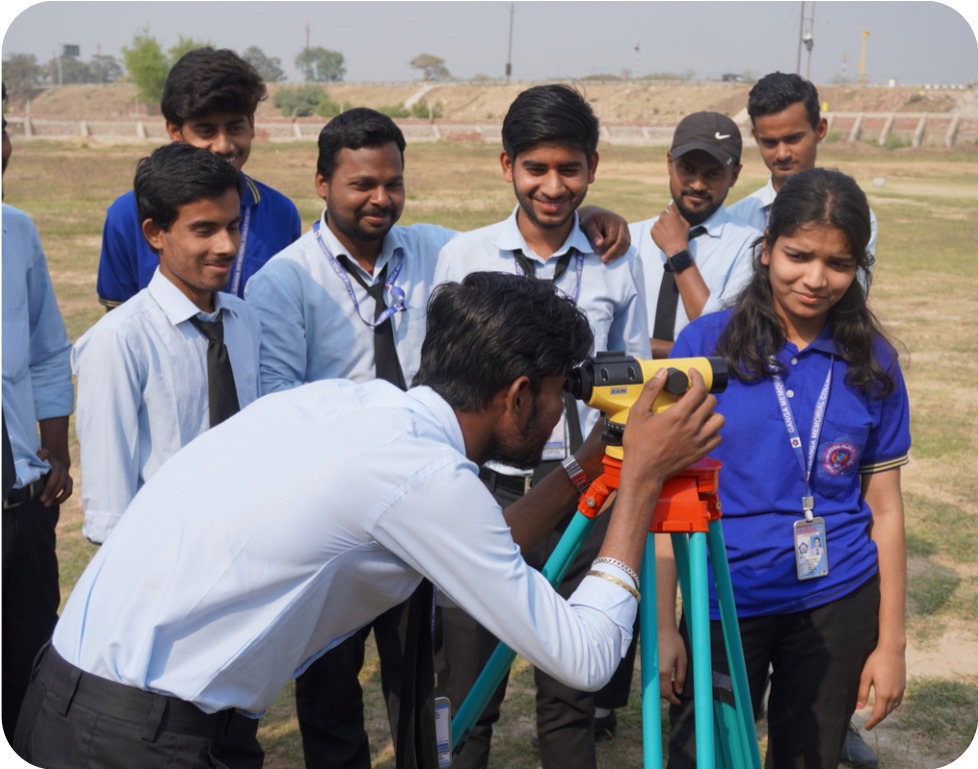 The Surveying Lab is designed to provide handson training in modern land measurement
techniques. Equipped with both traditional
instruments like Chain, Compass, Dumpy Level,
and advanced tools such as Auto Level and
Theodolite the lab helps students gain practical
knowledge of field surveying.
The Surveying Lab is designed to provide handson training in modern land measurement
techniques. Equipped with both traditional
instruments like Chain, Compass, Dumpy Level,
and advanced tools such as Auto Level and
Theodolite the lab helps students gain practical
knowledge of field surveying.
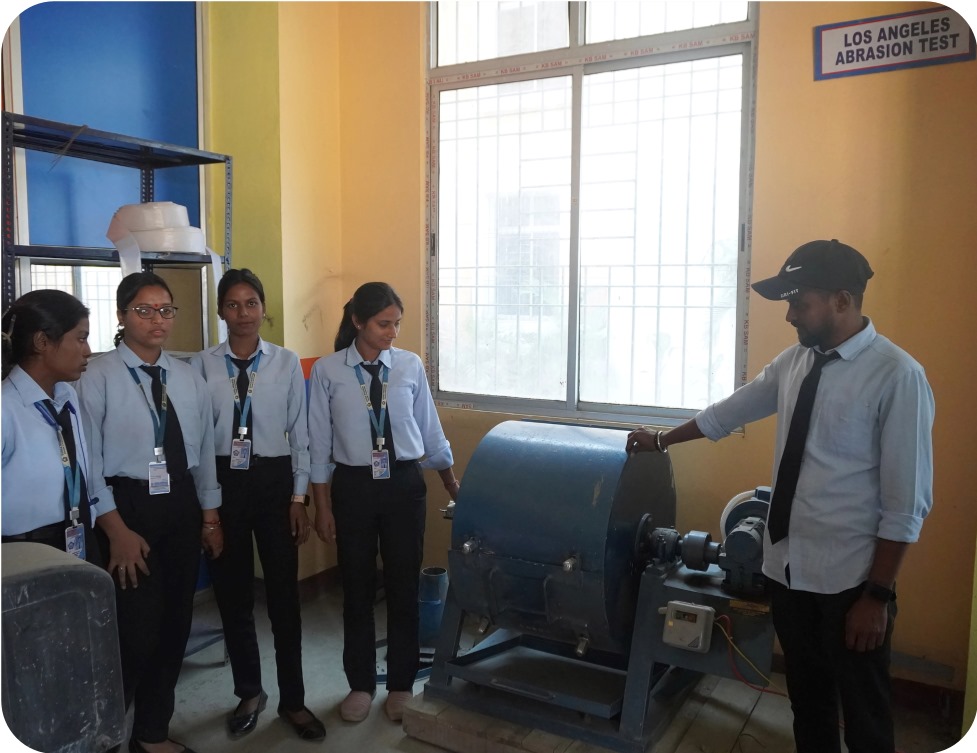 The Concrete Lab serves as a vital resource for
understanding the properties, behavior, and
performance of construction materials,
especially cement, aggregates, and concrete. It
is equipped with industry-grade tools such as
Universal Testing Machine (UTM), Slump Cone,
Vibrating Table, and Cube Moulds.
The Concrete Lab serves as a vital resource for
understanding the properties, behavior, and
performance of construction materials,
especially cement, aggregates, and concrete. It
is equipped with industry-grade tools such as
Universal Testing Machine (UTM), Slump Cone,
Vibrating Table, and Cube Moulds.
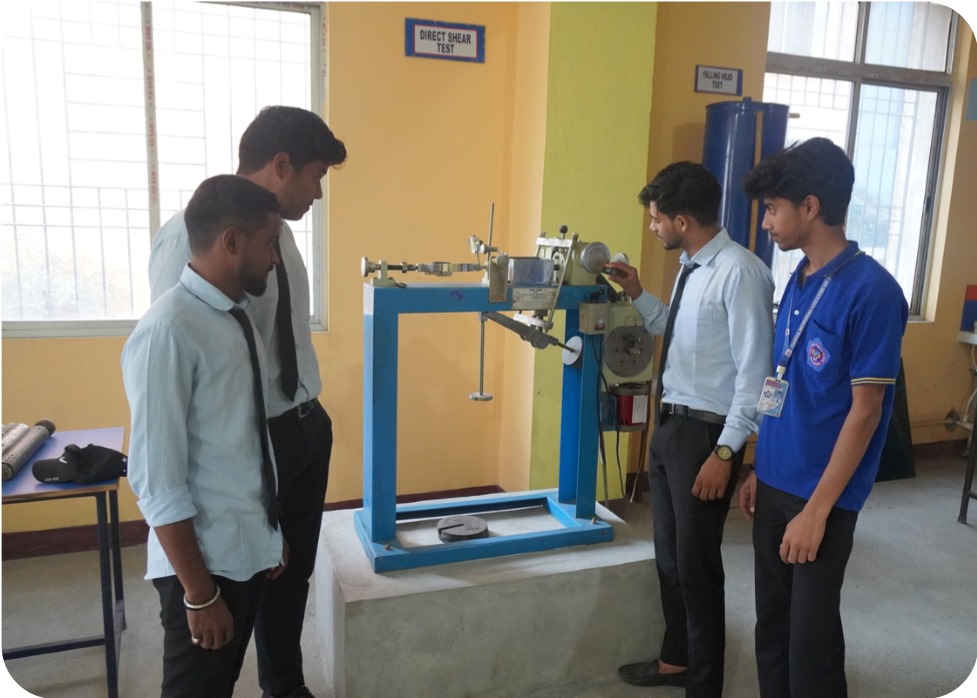 The Geotechnical Lab enables students to explore the
engineering behavior of soil, which is fundamental to
designing safe and stable foundations for any civil
structure. The lab is equipped with instruments like
Compaction Apparatus, Direct Shear Test Apparatus,
Casagrande Liquid Limit Device, and Permeability
Apparatus.
The Geotechnical Lab enables students to explore the
engineering behavior of soil, which is fundamental to
designing safe and stable foundations for any civil
structure. The lab is equipped with instruments like
Compaction Apparatus, Direct Shear Test Apparatus,
Casagrande Liquid Limit Device, and Permeability
Apparatus.
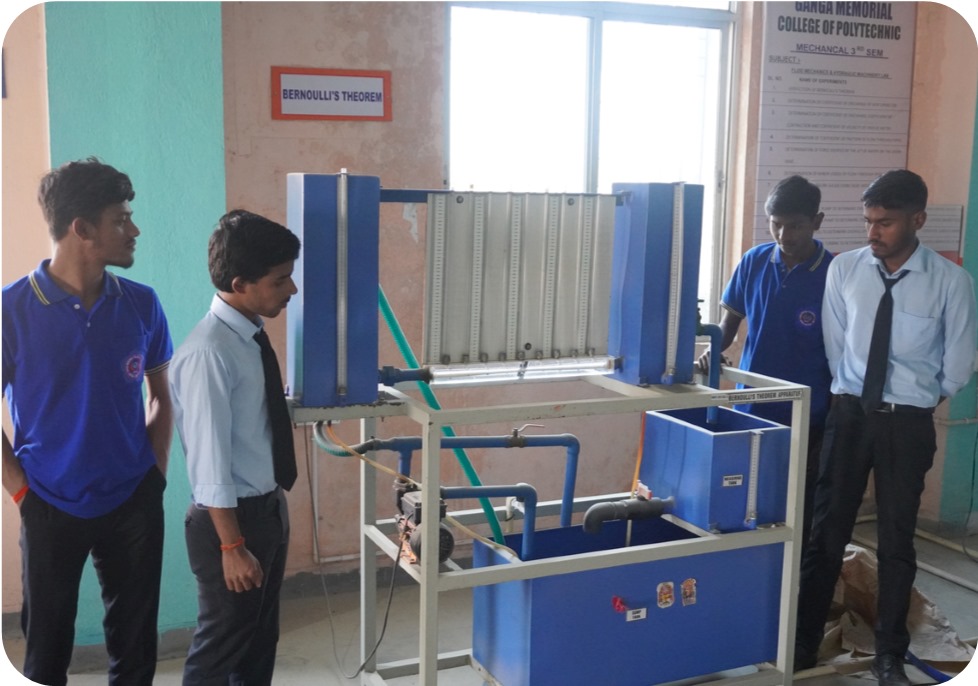 The Hydraulics Lab provides practical exposure
to fluid mechanics principles and hydraulic
machinery. It is equipped with experimental
setups like Bernoulli’s Apparatus, Venturimeter
& Orifice Meter Test Rigs, Notch Apparatus, Flow
Over Weirs, and Friction Loss in Pipes Test Units.
The Hydraulics Lab provides practical exposure
to fluid mechanics principles and hydraulic
machinery. It is equipped with experimental
setups like Bernoulli’s Apparatus, Venturimeter
& Orifice Meter Test Rigs, Notch Apparatus, Flow
Over Weirs, and Friction Loss in Pipes Test Units.
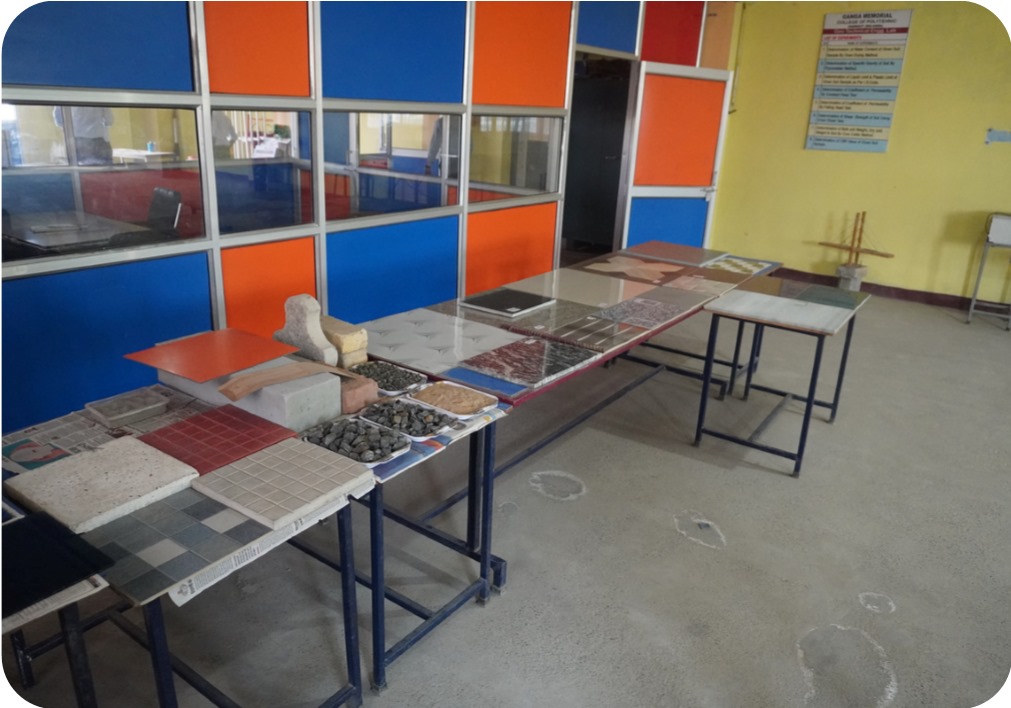 The BCCM Lab introduces students to various
construction techniques and building materials
used in real-world infrastructure development. The
lab houses a wide range of construction material
samples like bricks, stones, tiles, timber, and steel,
along with models of bonds, arches, scaffolding,
formwork, floors, roofs, and different types of joints.
The BCCM Lab introduces students to various
construction techniques and building materials
used in real-world infrastructure development. The
lab houses a wide range of construction material
samples like bricks, stones, tiles, timber, and steel,
along with models of bonds, arches, scaffolding,
formwork, floors, roofs, and different types of joints.
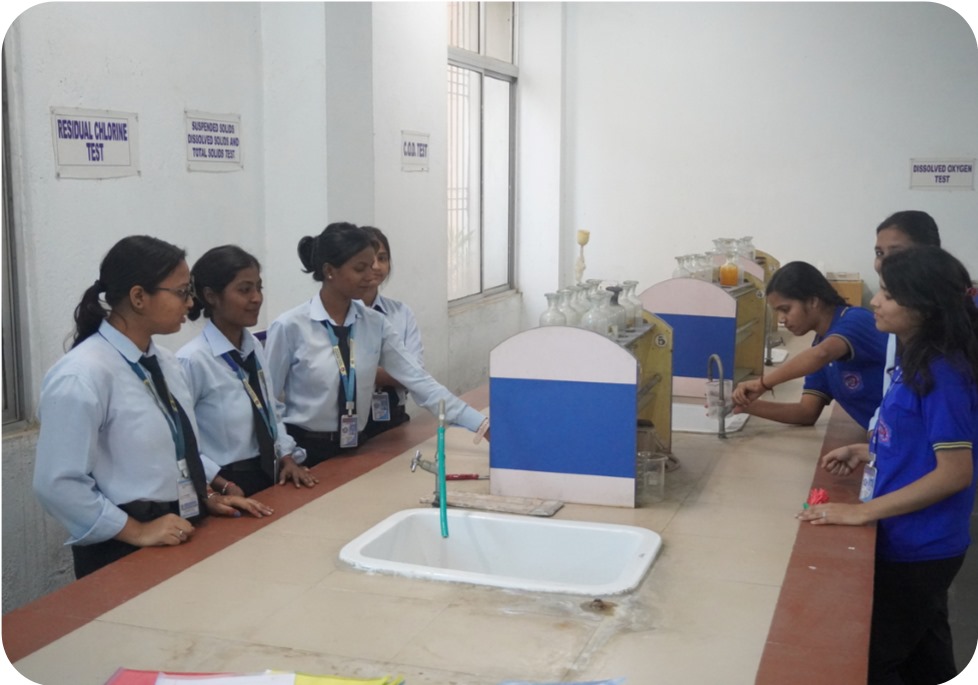 The BCCM Lab introduces students to various
construction techniques and building materials
used in real-world infrastructure development. The
lab houses a wide range of construction material
samples like bricks, stones, tiles, timber, and steel,
along with models of bonds, arches, scaffolding,
formwork, floors, roofs, and different types of joints.
The BCCM Lab introduces students to various
construction techniques and building materials
used in real-world infrastructure development. The
lab houses a wide range of construction material
samples like bricks, stones, tiles, timber, and steel,
along with models of bonds, arches, scaffolding,
formwork, floors, roofs, and different types of joints.
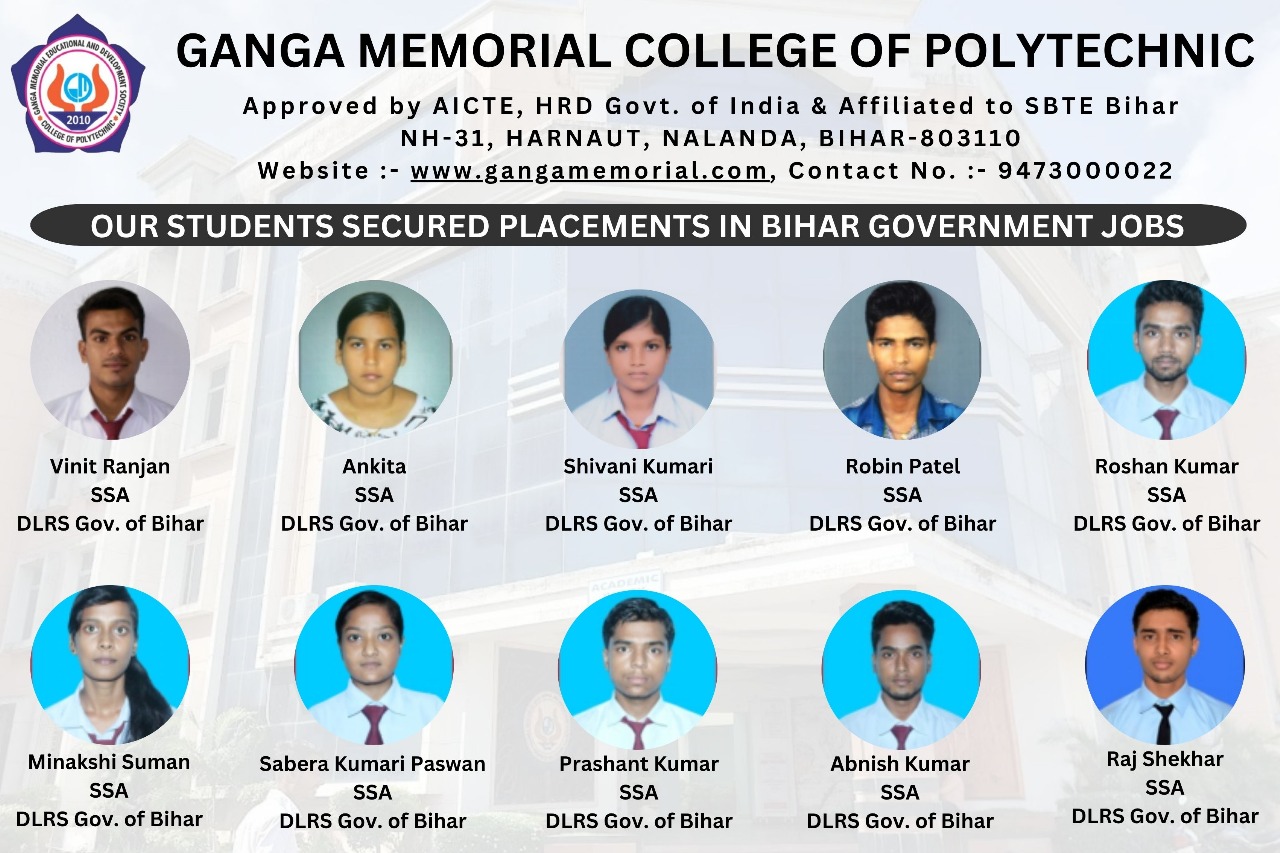
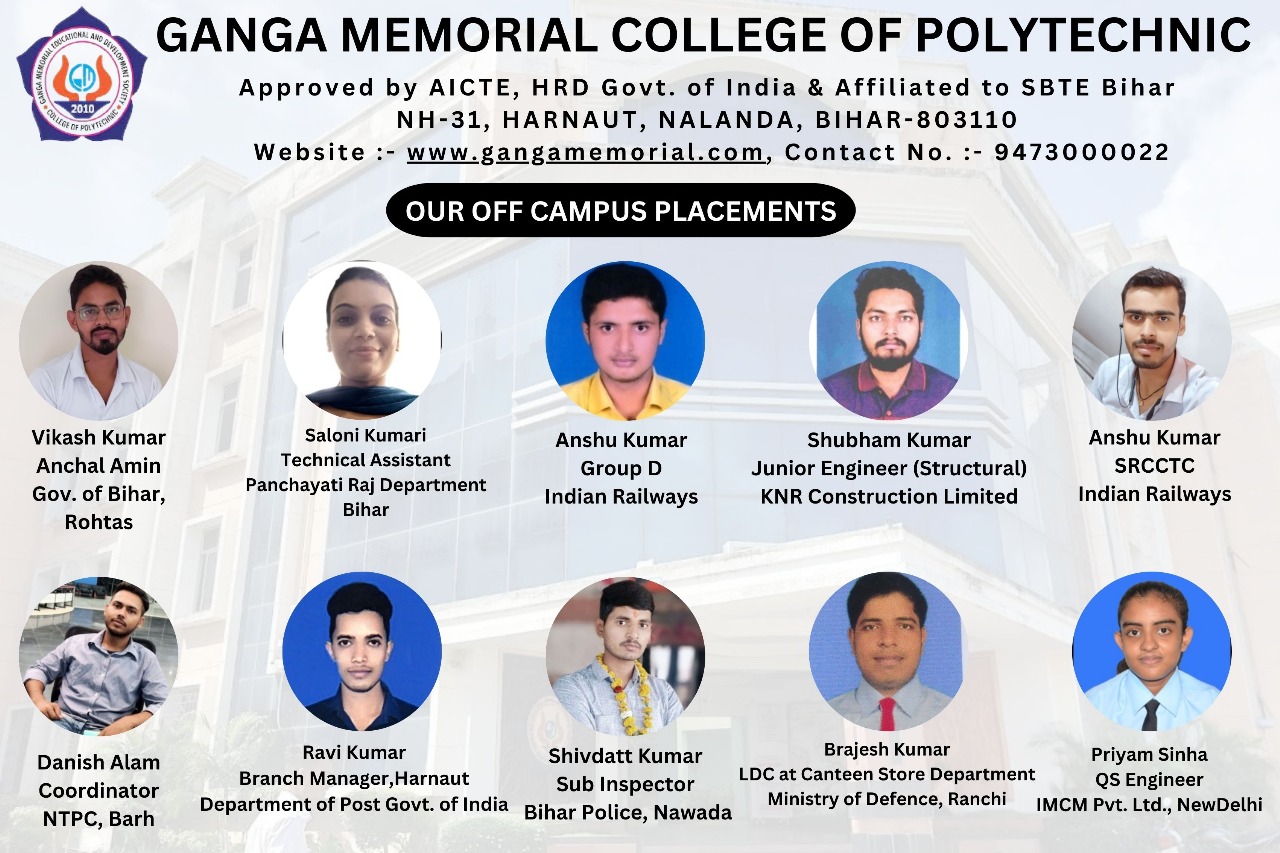
Our Achievements
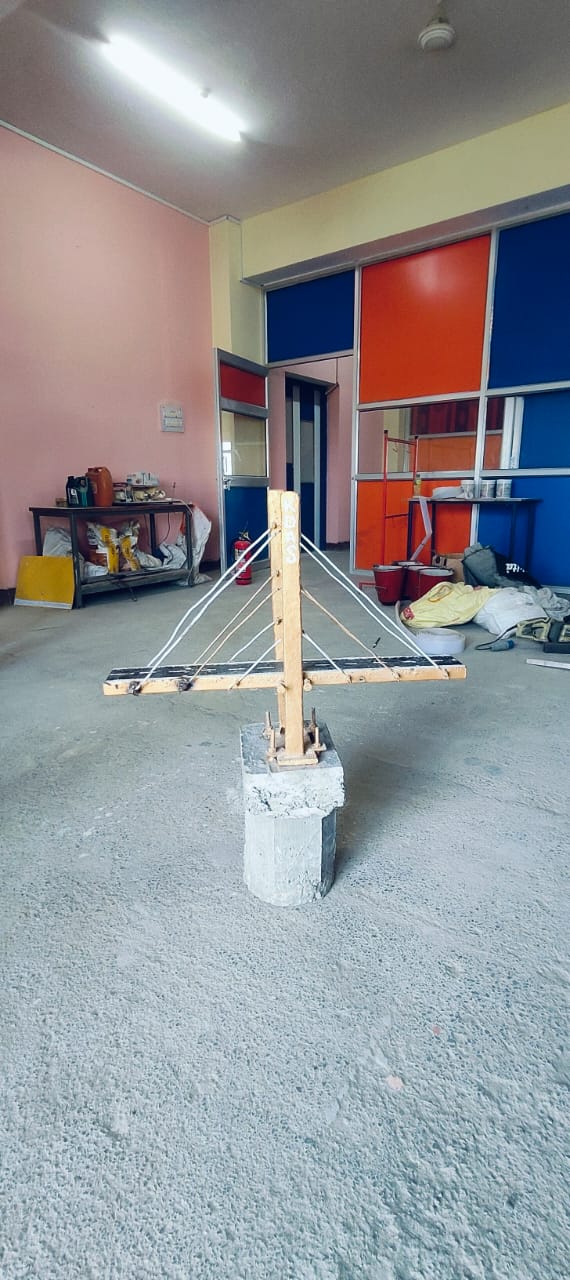
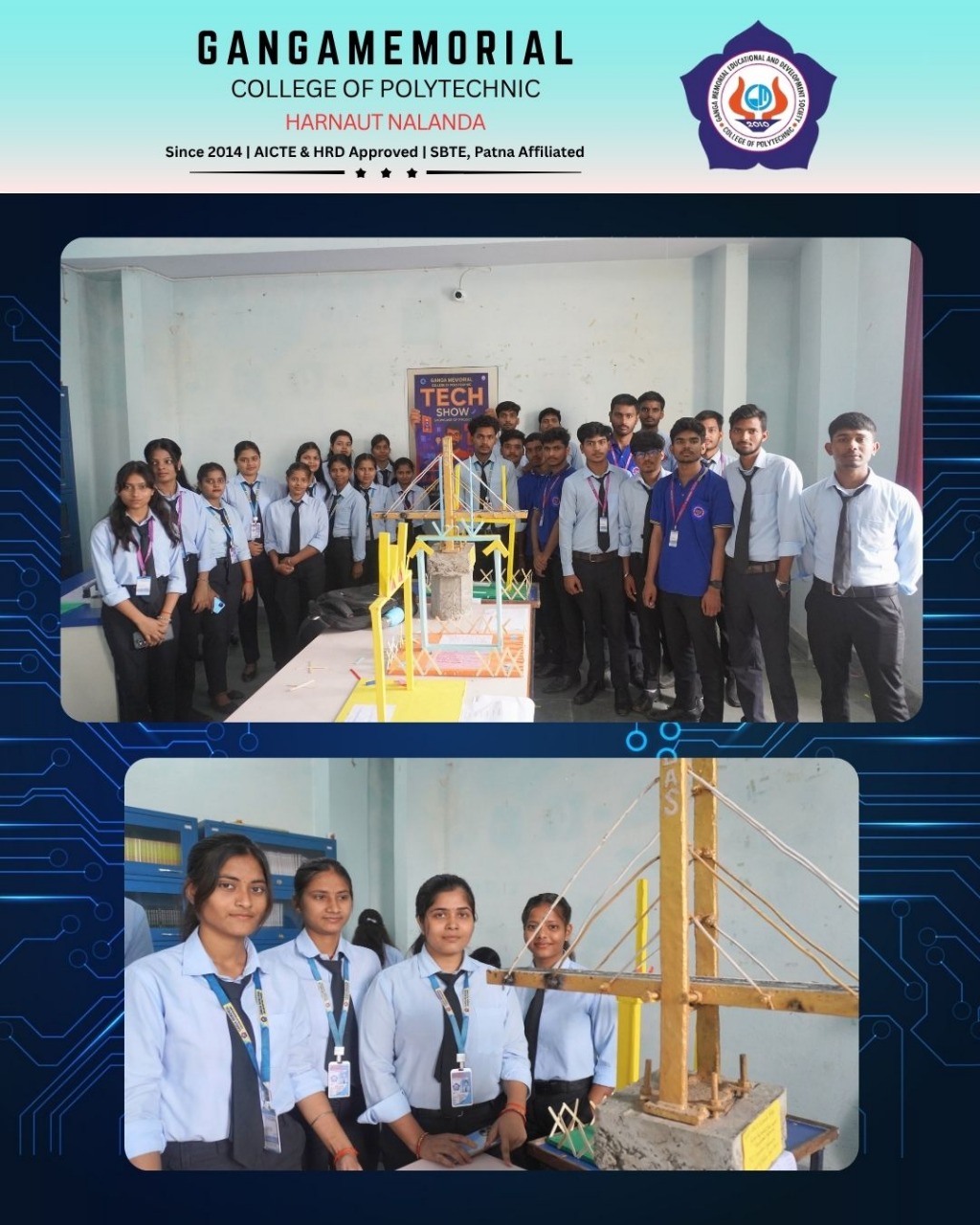
Research Projects
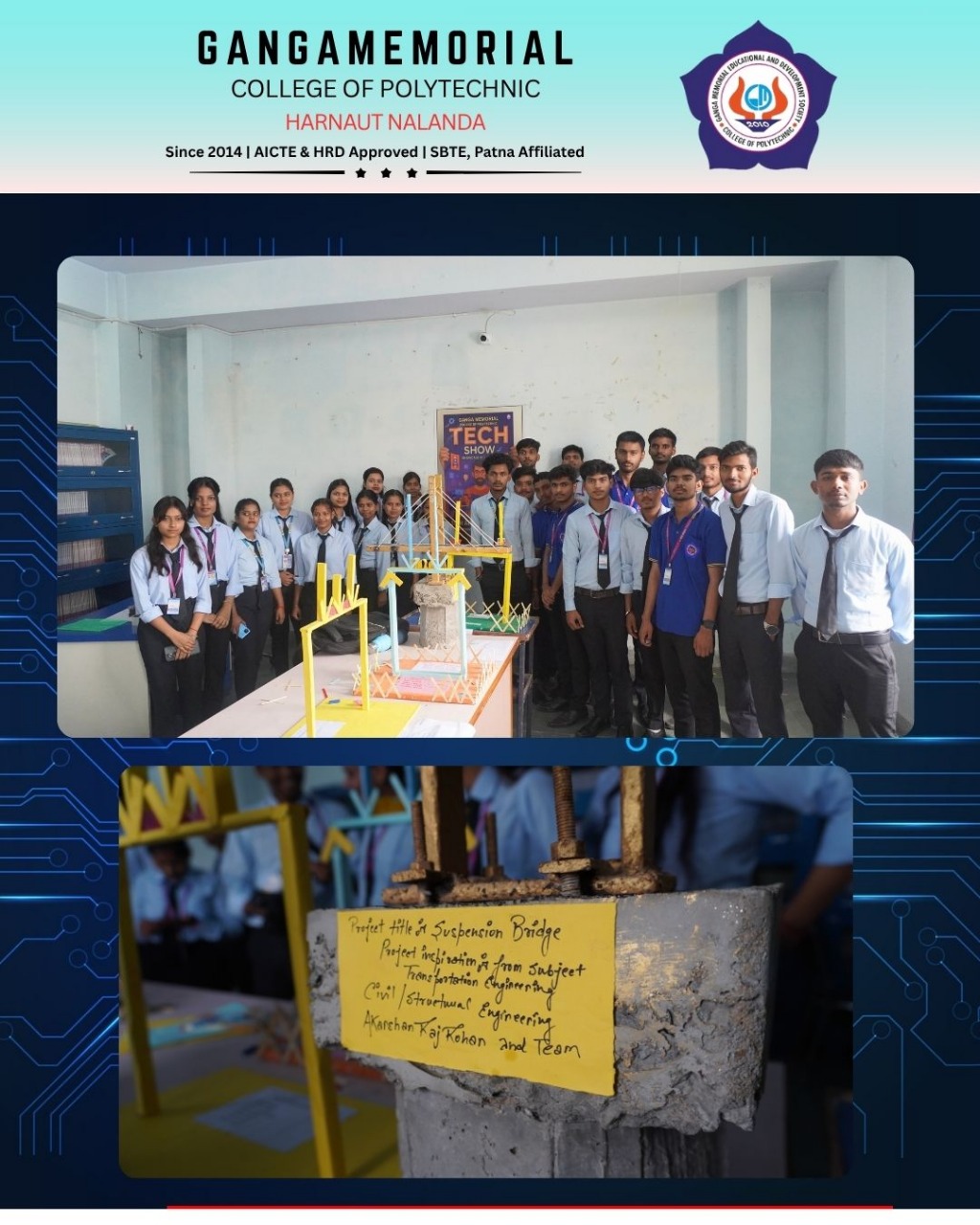

Ganga Memorial College of Polytechnic is proposed and identified at Kharuara, Harnaut, Dist.- Nalanda (BIHAR). It’s aim is to provide industry relevant education and training to its students with well crafted practical training Programme for the students in different semester of the courses.
+91-9473000022
+91-9288052611
gangamemorial@gmail.com
gmcp2611@gmail.com
NH-20, Ganga Nagar Near- Village- (Kharuara), Harnaut, Nalanda, Bihar-(803110)